

Driving Individual Growth
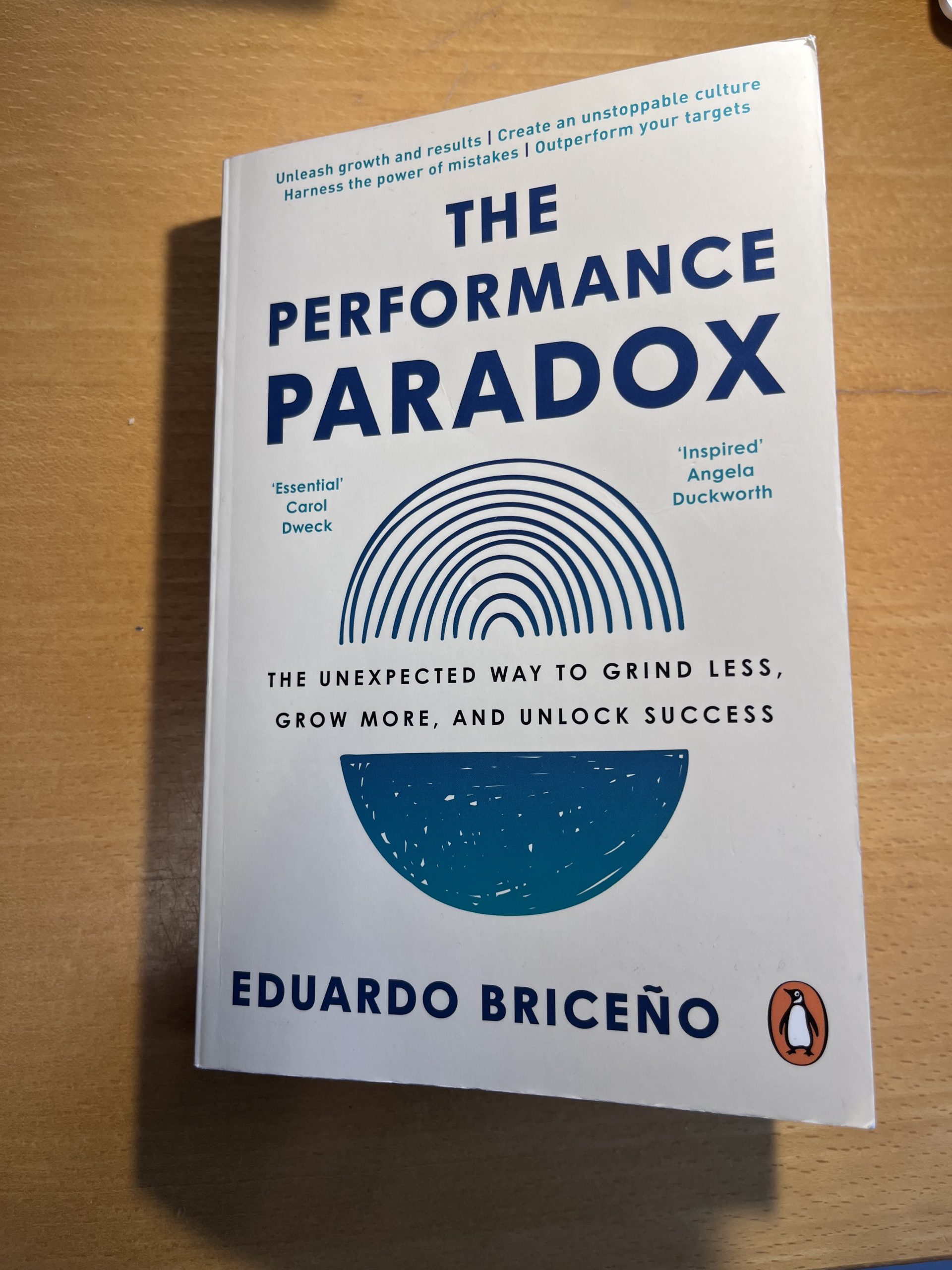
The Performance Paradox
While it might seem counterintuitive, constantly performing hiders our performance. The route to success is often not a straight line.
No one wants you to work any harder. We want to figure out how we can make things easier for you.
Chronic performance, the constant attempt to get every task done as flawlessly as possible, and then some.
Doesn’t hard work lead to better performance? The answer is a paradox – one author calls the performance paradox. The performance paradox is the counterintuitive phenomenon that if we’re constantly performing, our performing suffers. The reality is that to improve our productivity, we can’t focus only on producing. If we keep doing, doing, doing, we get less done. It can feel like we’re doing our best, when in fact we’re missing out on discovering better ways to create, connect, lead, and live.
To prosper in today’s complex and fast-changing world, we need to balance and integrate performance and learning.
If we focus only on performing the activity, our skills plateau and we risk becoming irrelevant, or worse.
When organizations give in to command-and-control temptations, workers who ask questions – who readily admit they don’t have all the answers – start to be seen as obtrusive, slow, and burdensome.
The C-suite with flawless execution inhibits true growth – even financial growth.
A growth mindset is not a silver bullet. Growth mindset is a necessary foundation that needs to be cultivated in tandem with effective strategies and habits for growth.
Just because someone is in a growth mindset, it doesn’t mean they know how to learn or implement effective strategies to actually improve their skills. To effectively learn and improve, we must develop and implement habits and strategies that support growth. To grow and succeed, we must develop the belief that we can change, as well as the competence for how to change.
The Tournament and the Range
To overcome the performance paradox and unlock growth, we need to integrate the Learning Zone into our work and life.
We have The Performance Zone and The Learning Zone. We embrace the Learning Zone the moment we choose not to respond in anger when someone critiques our work and decide instead to listen to what they are saying in an honest attempt to truly understand and learn from them.
Many of us need to unlearn our assumptions about learning.
Perfection can be a direction to progress toward, but not a destination, because it’s unattainable.
Is it possible to integrate the two zones? Can you learn while you perform?
The Learning Zone and the Performance Zone are states of mind and their related strategies. They’re not places, blocks of time, or permanent states, but rather a way of thinking and acting.
Performing can lead to growth in the beginning stages of skill development.
Regular engagements in the Learning Zone allows you to uncover and learn ways to work smarter, more efficiently, and more effectively.
While it’s tempting to stick to what you know – especially when you feel starved for time – engaging in the Learning Zone actually creates time as you learn how to improve your ability to prioritize, collaborate, and get more done in less time.
By using the two zones, we increasingly grow our outcomes and impact.
When trying to maximize short-term performance, it makes sense prioritize the Performance Zone.
What ability or quality am I currently working to develop?
Integrating the Learning Zone and the Performance Zone: Learning While Doing
We don’t learn by doing, but we can learn while doing.
If I only had time to learn …
The Learning Zone enables growth, but it also enables a mindset shift, one that allows us to view even high-pressure performance situations as opportunities for learning. But the mindset shift is only part of the equation. Effective Learning Zone strategies are just necessary.
John Dewey, Kurt Levin, and David Kolb – education reformers who pioneered experiential learning and learning by doing.
- Try something new and experience the effects.
- Reflect on your observations.
- Develop a hypothesis based on those observations.
- Plan how to test that hypothesis.
- Repeat the cycle by trying something new again.
Dewey: “We don’t learn from experience … we learn from reflecting on experience.”[1]
How to bring a commitment to learning even to high-pressure situations:
- Take note of the problem.
- Devise a simple experiment – a new approach to an old way of doing things.
- Ask yourself, “How might we magnify the impact?”
- Don’t give up when you hit “know-it-all” resistance.
- Stay committed to performing.
Stay committed to get things done in a way that will also lead to improvement.
Six Essential Learning Zone Strategies
Developing different competencies calls for different Learning Zone strategies.
Six strategies:
- Practice deliberately. Expertise is something any of us can develop at any age. To engage in deliberate practice: break down abilities into component skills, get clear about what subskills you’re working to improve at any given time, give full concentration to a high level of challenge outside your comfort zone, just beyond what you can currently do, user frequent feedback with repetition and adjustment, ideally engage the guidance of a skilled coach.
- Learn big by experimenting small. Passion without a solid learning process can lead to derailment. Clarify what you seek to learn before you scale or commit. Set up a small experiment to learn quickly and leanly. As you learn and reduce uncertainty, move from exploration to application.
- Work smarter, not harder. Make it a habit to consider what’s working, what’s not, and what to try differently. Identify challenges and points of frustration, and ponder how they might be turned into opportunities for improvement. Ask why you’re doing what you’re doing and how you might better achieve that higher-level goal. Deepen your expertise. Learn from people around you. There are always better ways of doing things.
- Create habits to strengthen your “air sense”. Air sense is the knowledge, expertise, and experience developed into intuitions. Target areas for improvement. Find and access high-quality sources of expertise. Consider how you respond to confusion or setbacks. Use the people around you as a brain trust.
- Don’t bulldoze. Rest is essential. Since much of our behavior is nonconscious, we have to be productive about the habits we foster.
- Ask why. The cornerstones of change. I can learn, I know how to learn, I have a why.
No matter what skills you’re trying to improve, here is a universal formula:
- Identify what skills you want to improve.
- Read or listen to experts discussing how to develop that skills.
- Try what they recommend.
- Regularly gather feedback and reflect on how to evolve your practice.
Unleashing the Power of Mistakes
Mistakes are not universally good or bad. To improve learning and performance, we need to get clear on how and when to elicit, try to avoid, and respond to different kinds of mistakes.
Mistakes are fundamental to continuous improvement. This process requires us to closely observe the world, develop hypotheses for what might work better, and test ideas.
In his podcast, Andrew Huberman points out that after about age twenty-five, the only ways to trigger neuroplasticity – changes in the brain’s wiring that shifts our thought patterns – are when something really surprises us, when something very bad happens to us, or when we make mistakes.
- If we don’t try, the brain never rewires for the better.
- If we quit, the brain will get better at quitting.
- If we keep going, the brain will get better at persisting.
When we are engaged in trying to learn something new, the struggle we encounter around mistakes causes our nervous system to release a chemical called epinephrine, which increases alertness, and another called acetylcholine, which increases focus.
Then, when we experience some success, another chemical is released – dopamine – that allows for the plasticity, the learning, to take place.
We can reflect on our mistakes on our own, but the results are even more powerful when we do so in collaboration with others.
There is always room for improvement. We will never do anything perfectly. The world is too complex for that.
As MIT professor Peter Senge noted in his seminal book The Fifth Discipline, one of the key competencies that differentiate learning organizations is system thinking.
We must agree on when to focus on what we know and when to take risks in the service of learning.
It is helpful to differentiate between different kinds of mistakes and clarify which mistakes we want to pursue and how, and which mistakes we want to try to avoid.
Sloppy mistakes. When you are doing something you already know how to do, but you do it incorrectly.
Aha-moment mistakes. They happen when you do something as you intended, but realize it was the wrong thing to do. At that moment, you have a powerful realization – an aha! – a strong, new insight that expands your understanding and awareness.
Stretch mistakes. Whenever you’re working to expand your current abilities and try something new, you’re bound to makes some errors along the way. These kinds of stretch mistakes are positive.
High stakes mistakes. They can be dangerous.
Many real-life errors combine aspects of the four kinds of mistakes. The aha-moment and stretch mistakes tend to be the most valuable because you can learn the most from the without significant harm. Stretch mistakes are those you elicit in the Learning Zone, while the other three usually happen in the Performance Zone.
Weaponizing mistakes will lead others to avoid risks, hide failures, and revert to chronic performance, which will lead to stagnation.
Six Common Misconceptions
To overcome the performance paradox and reach new heights, we must clarify what these drivers of growth mean and how to foster them.
A true growth mindset cultures creates structures and rituals that support continuous learning and encourages people to apply those lessons for ever-increasing impact.
- Misconception: A growth mindset is the same as positive thinking, working hard, or persevering, and it magically fosters growth.
- Reality: A growth mindset is the belief that our abilities and qualities can change – if we engage in the Learning Zone.
It is our actions that lead to improvement, not the belief alone.
- Misconception: The trap of the performance paradox: All this emphasis on learning and growth hinders performance.
- Reality: Learning drives higher performance and impact – if we hold ourselves accountable.
Next.
- Misconception: All praise and encouragement is good.
- Reality: Some forms of praise and encouragement can be helpful if not misdirect or overdone.
Encouraging people to work hard doesn’t tend to work if the people they’re encouraging believe they can’t change.
Some powerful questions: What are your working on? How are you going about it? How well is that working? What are you learning? What might you try differently?
- Misconception: You either have a growth mindset or you don’t.
- Reality: Mindsets exist on a spectrum: they are contextual fluid, and can change over time.
Next.
- Misconception: Growth mindset is all about responding to setbacks and mistakes.
- Reality: Proactive growth is a lot more powerful that staying active.
Next.
- Misconception: We can encourage our level ones, team members, or young people to grow, but only they can take action to achieve results.
- Reality: If we want people to grow, we also need to cultivate environments that are conductive to growth.
Understanding that we can change equips us to examine how to do so.
The Growth Propeller: Five Key Elements That Drive Growth
To become learner and performer, work on developing your: identity, purpose, beliefs, habits, and community.
The growth propeller has three blades: beliefs, habits, and community. In the center are two base elements: identity and purpose.
Thomas Szasz: “The self is not something one finds, it is something one creates.”[2]
Our beliefs about competence, agency, and transparency can support or undermine our growth and performance in any area.
We can separate habits into three categories:
- Proactive habits are those we put in place to develop a particular skill or body of knowledge.
- Responsive habits are triggered by events around us.
- Stem habits are stable habits that ensure our constant evolution.
We don’t have to build our identity or purpose before working on our beliefs, habits and community. Working on any one of these components helps build and strengthen the others, because they all reinforce one another.
Overcoming the Performance Paradox in Teams and Organizations
Pillars of a Learning Organization
The strongest organizations are learning organizations.
Our human bias to overvalue the present and undervalue the future, coupled with reinforcing structures lead us to forgo investment in the Learning Zone that would yield great performance dividends later on.
Spray and pray sales technique: they would spray information and pray that something met a need. Good salespeople are problem-solvers. They listen more than talk.
The path of becoming a learning organization involves a combination of top-down and bottom-up efforts.
When leaders don’t continue to engage in the Learning Zone to question their assumptions and discover more effective approaches, the seemingly strong culture of their organizations can be a major obstacle to progress and growth.
Getting Teams in the Zones
Powerful norms, principles, and techniques can equip any team to embrace the two zones.
In their first twenty-eight days of life, more than three million babies die every year.
Design thinking can equip any team to overcome the performance paradox. Design thinking is just an example. Therea re many other philosophies, norms, and processes you can use to foster learning teams. We have already seen many such examples – be bold, extreme ownership, learn big by experimenting small, work smarter not harder, change is our default, video always tell the truth, progress rather than perfection.
The design thinking process moves through stages which generally alternate between divergent and convergent thinking – between expanding possibilities (creating options) and narrowing them (making choices).
The Collaboration Superpower
By building trust, psychological safety, and transparency, we can collaborate more effectively when learning and performing.
We live in a world that venerates competition – the opposite of collaboration. It reinforces the performance paradox and fools us into chronic performance. Collaboration drives better learning and better performance. Competition has some value. A competitive spirit can help all parties remain accountable for putting their best foot forward in both the Learning Zone and the Performance Zone. Within organizations, competition is much more destructive than helpful.
- Learning team foundation #1: Establish trust, relationships, and purpose.
- Learning team foundation #2: Empower people to initiate change.
- Learning team foundation #3: Promote radical transparency.
- Learning team foundation #4: Create a culture of psychological safety.
- Learning team foundation #5: Encourage people to solicit feedback frequently and broadly.
To foster a sense of belonging and elevate the purpose of the collective:
- Spend time as a team getting to know one another.
- Identify your common purpose and values.
- Identify the team goals and strategies.
- Avoid symbols of belonging that could be exclusionary.
We need to ensure that people feel that engaging in the Learning Zone can lead to real change. Leaders need to give their staff true agency so that their effort in the two zones reaps real rewards.
Transparency, an element of the growth propeller, involves sharing our improvement objectives along with our concerns, questions, feedback, mistakes, and lessons learned.
Amy Edmonson find in her book The Fearless Organization, that the error rates appeared to be higher in what a validated survey instrument deemed higher-performing teams. They actually didn’t do more mistakes, they just reported them more often.
When psychological safety is high, candor no longer feels risky, according to Henrik Bresman.
Edmonson and Bresman suggest that teams can promote psychological safety by using framing and inquiry. Framing is about clearly communicating so that people interpret a situation on behavior in a desired way, most notably as one that calls for candor and learning. It involves making our implicit assumptions explicit so that we can all align around them. Inquiry is about explicitly asking members to contribute their thoughts.
Many people feel critical feedback is negative feedback. But critical feedback is the most powerful source of information for growth so how can it be negative?
Leading for Growth
To learn and perform at high levels, people need leaders who care about them and who provide clear guidance on when and how to engage in the two zones.
Management theory was born in the Industrial Revolution. The approach was command and control: Managers would design systems and tell people what to do.
Organizations need to nurture their collective intelligence.
We need to go from command and control to painting a vision, inspiring purpose, fostering wellbeing, empowering employees to take initiative, and supporting their development.
Different regions have different norms for how much information people tend to share about their personal lives.
Feedback must also be framed. To prevent people from reacting defensively, share why you’re giving feedback and define what feedback is: information for consideration that anyone can benefit from and that we desire, too. Remember the false consensus bias, which leads us to overestimate the extent to which people think like us.
How to frame for a learning culture:
- Belonging
- Predictability
- Competence
- Trust
- Agency
- Status
- Purpose
- Overarching logic
Great Leaders are Great Learners
Skratch Labs runs analysis to understand their significant failures. Each analysis follows the same process, in which they discuss four things:
- The known costs.
- The unknown costs.
- The decisive point.
- Process changes.
It’s not enough to just give people marching orders. Effective leaders are also effective teachers. They guide people along the way not as know-it-alls, but as leaders with a vision of how to work, always open to considering others’ perspectives.
Leaders need to engage in what author calls asymmetrical modeling. If we want people to talk and ask questions we need to tell them that’s what we want and explain that we’ll give them space to talk – and then do just that. If we want people to voice their ideas and disagreement, we don’t start by voicing our own ideas and disagreements.
Visibly modeling learning works best when others believe we’re competent.
To develop a strong culture of growth, start with care and trust, frame and guide, set up systems for the two zones, and regularly communicate, incentivize, reward, and model.
From Individual Transformation to Global Impact
The Flywheel of Competence – In Motion and Unstoppable
The Performance Zone enables you to get things done and contribute.
Always begin at the end – your end goal, that is. Before jumping into execution, make sure you and your colleagues are clear about what you’re seeking to accomplish.
“Failing to prepare is preparing to fail,” wrote John Wooden in his book Wooden: A Lifetime of Observation and Reflection On and Off the Court.[3]
Preparation is the on-ramp to the Performance Zone.
Because most of our behaviors are driven by our habits and environments rather than by rational decisions, we need to thoughtfully design our routines and systems to best support both zones.
Some of the team systems and frameworks: Level 10 Meetings framework (part of EOS – Entrepreneurial Operating Systems – toolkit), Agile Methodology, OKR, Scaling UP (formerly known as Rockefeller Habits), MIND (Most Important Number and Drivers) methodology.
Dual-consciousness multitasking just doesn’t work.
In the Performance Zone, we are working not to improve but to execute. Yet, knowing that we can improve – later, in the Learning Zone – helps us stay in the mental and emotional states that elicit our top game.
The highest performers use struggle, mistakes, or failure as cues to flip to the Learning Zone, but not necessarily right away.
If we want to perform skillfully, we need to set up accountability systems for ourselves and our teams. Accountability is about aligning our goals and timelines and setting up processes to track them and troubleshoot when needed. We clearly define roles, responsibilities, and expectations, identifying how to measure progress and success, and set in place periodic check-ins to examine how things are going. When setting up accountability systems, ensure that there are feedback loops.
Overcome the Paradox, Change Lives
When we overcome the performance paradox and break out of chronic performance, we change both our journey and the destination.
It may seem ironic that companies in the tech sector, while dedicated to innovation, were stuck in chronic performance when faced with a significant challenge.
We live in the learner’s paradise and a non-learner’s swamp. Avoid learning and you are left behind. Embrace learning and the world is your playground.
If we just do what we think works best, without subjecting our thinking to testing and experimentation, we stagnate.
If there are differences of opinion on what will work best, we often left power dictate who gets to choose. We are, as a society, largely stuck in chronic performance.
We all have agency over ourselves, our actions, our choices, and the way we live.
Afterword
As Leonardo said, art is never finished, only abandoned. The Performance Zone is how we scale impact.
[1] In the book on page 44
[2] In the book on page 112
[3] In the book on page 238


